

School choice has been gaining momentum in recent years. In fact, all 50 states offer some form of school choice, ranging from public-only options, public, charter, and magnet alternatives, and universal private school choice.
While school choice has opened up new opportunities for students and families, it has also introduced complexity into the ways in which these states define and measure student success. As students move across various types of school settings, inconsistent metrics and data from multiple assessment providers make it difficult to compare outcomes, ensure quality, and uphold accountability. That’s why we need a universal measure for reading and math. With a common measure, we create a level playing field that allows policymakers, educators, and families to evaluate performance using the same scale, enabling them to truly know if a student is on track to reach their educational goals.
Universal Measures in a Connected Framework
A universal or common measure provides the ability to measure students’ reading and math ability, text complexity, and growth and place them on the same scale, without the need to add more tests (unless, of course, the student attends a private school that opts not to conduct assessments at all). With a common measure in a connected framework, educators and administrators across schools and districts can pinpoint where students are today so they can predict, forecast, and plan for what’s next.
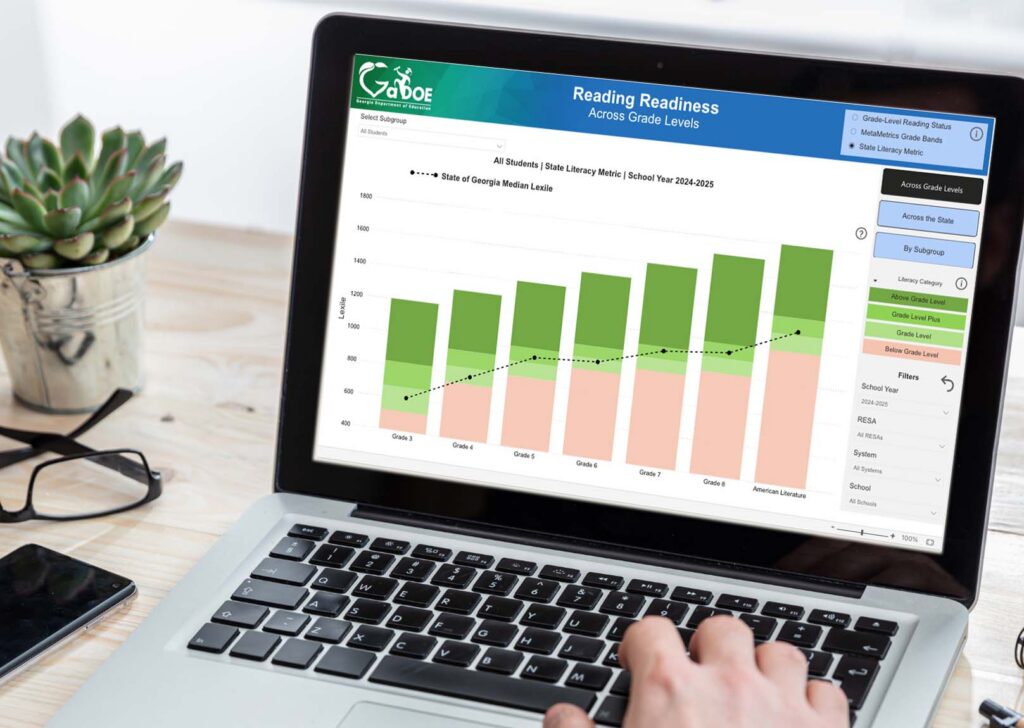
The Lexile® Framework for Reading and Quantile® Framework for Mathematics are universal measures that enable policymakers, partners, and educators to align reading and math ability with content in a connected framework. Since their introduction by MetaMetrics over 40 years ago, Lexile and Quantile measures have provided individuals, educators, assessment providers, publishers, and policymakers with a common scale that they have relied on and trusted to gauge student reading and math ability and progress. In fact, 35+ million students currently receive Lexile and Quantile measures, and 20+ state departments of education report them as well.
The Role of Universal Measures in School Choice
School choice has sparked a lot of debate about accountability—both what we call “big A” accountability at the federal and state level, and “little a” accountability to the community at large.
As policymakers continue to debate the effectiveness of school choice, they need a way to see if these alternative paths are working. For example, traditional public schools track results via state assessments, while students in charter schools are required by federal law to take a statewide annual assessment. Private schools, on the other hand, are not required to conduct assessments—and many do not. And some states, like Utah for example, require students to take a “nationally norm-referenced test” or submit a portfolio.
Without a common way to measure these tests and portfolios—and put them in context with assessments other students are taking—it becomes virtually impossible to draw comparisons. Without a consistent way to measure ability and progress, reading and math performance can be interpreted differently across districts and schools, making comparisons uneven and accountability inconsistent.
A universal measure, on the other hand, creates clarity. It brings transparency to expectations, ensures everyone is evaluating student progress using the same criteria, and makes results comparable across schools. This alignment not only strengthens public trust and helps parents to make informed decisions about their child’s education, but also helps policymakers to identify what’s working, where gaps exist, and how to allocate resources more effectively. It enables accountability, both at the federal and state levels, as well as with the community as a whole.
Operationalizing Universal Measures
To operationalize universal measures in a school choice environment, states must move beyond the idea of accountability as a reporting exercise and instead, embed shared metrics directly into the decision-making infrastructure. As policymakers evaluate outcomes, they need comparable data that is consistent, transparent, and uniform across schools, districts, and sectors. The same is true for families who are trying to decide if sending their child to a school across town is the right choice.
Common measures, such as the Lexile and Quantile measures, allow policymakers to ensure that everyone, regardless of their school or district, is using a common measure of performance that aligns assessments consistently and reports student progress and results the same way. Said differently, regardless of which assessment a student takes and which school they attend, Lexile and Quantile measures remain constant, allowing everyone to assess day-to-day and year-to-year growth in a way that is consistent and equitable across schools, districts, and learning formats. As a result, families gain access to consistent information that allows them to compare outcomes across different types of schools to determine which one is right for their child.
Connecting Learning Today with the Skills of Tomorrow
The jury remains out on whether or not school choice offers students greater opportunity than the traditional, geographically determined model. But regardless of where it lands, without a clear, consistent way to measure reading and math ability, it will remain difficult to assess performance consistently. As a result of inconsistent measures, families are left trying to decipher what a measure means rather than evaluating how the measures impact outcomes.
Consistent measures, on the other hand, provide a shared foundation: they make results comparable and expectations transparent. They ensure that every school—regardless of sector or format—operates against the same standards of success. In the end, when choice is grounded in universal measures, families can feel confident that taxpayer dollars are funding educational programs that truly benefit students, enabling them to make an informed decision on which option is best for their child.
If you are attending ASU+GSV 2026 and would like to hear more about how universal measures can support school choice, attend the panel, “The Modern Infrastructure Layers Needed to Support Multiple Choice,” featuring Chris Minnich, CEO, MetaMetrics.
Subscribe to Our Newsletter
Stay up-to-date with the latest updates, insights, and announcements from MetaMetrics and our partners.
Sign-up now