
As a former Career and Technical Education (CTE) teacher, I fought the outdated stigma of college vs. career, but I loved teaching relevant skills and concepts that would help my students thrive in both. Fast forward 15 years and career-connected learning is really gaining momentum. Today, educational leaders are working to break down long-standing silos in order to better align classroom experiences with real-world opportunities. Preparing students for the workforce of tomorrow, of course, includes education around recent technology and AI, but it starts with something more foundational: building strong reading and math skills today.
Strong reading skills enable people to understand and interpret information, think critically, and communicate effectively, while math skills connect to the world we live in, building the ability to solve problems, make decisions, and navigate essential daily functions such as financial literacy. Together, these core competencies empower individuals to grow, adapt, and succeed in college, in their careers, and in life.
But to prepare students for the future, educators need to understand the full picture of the student—not just how they performed on a single test. They require a view into how a student’s reading and math skills develop over time and project toward their career goals.
A Clearer View of Student Growth
When educators can consistently track and forecast reading and math ability, they gain insight into a longitudinal view of student ability, offering insight into year-over-year growth and providing a more structured path toward meeting future academic and workforce expectations and achieving personal goals. With these forecasts in hand, educators can set focused learning agendas, intentionally adjust instruction, and help students build skills that compound year over year. As a result, students not only learn more, but also gain a clear pathway to develop the confidence, capabilities, and motivation needed to thrive in college, careers, and life.
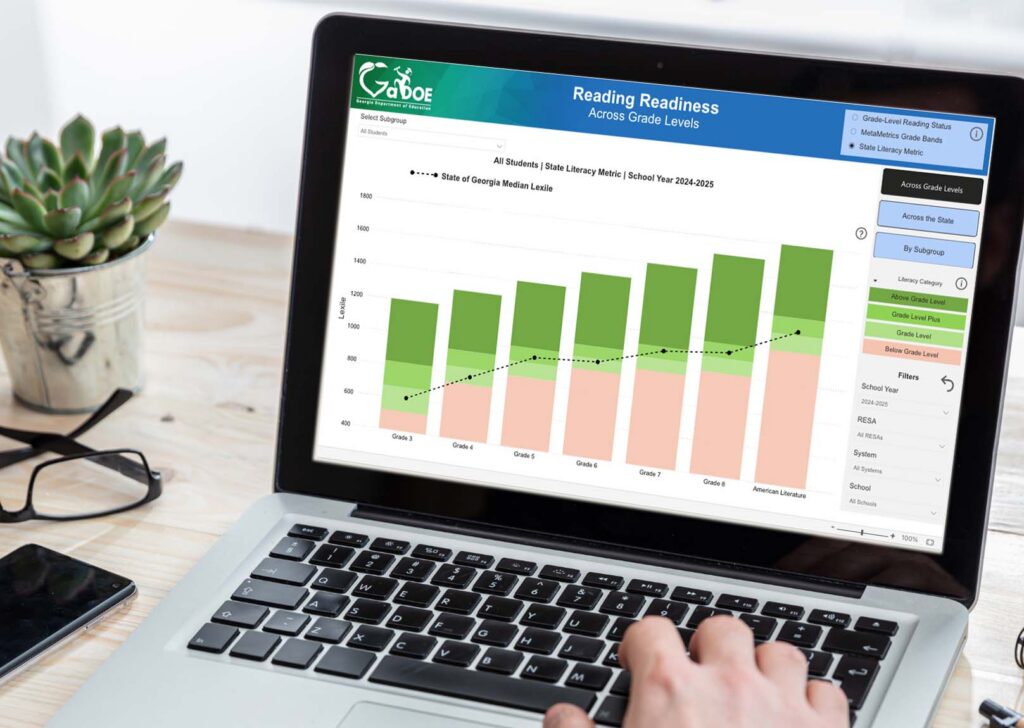
MetaMetrics enables educators to plot a student’s current Lexile® reading or Quantile® math measure alongside historical data so they can forecast likely college readiness. However, we’ve recently taken a giant leap forward in career exploration by mapping each Lexile and Quantile measure to the entry-level job requirements for over 600 careers in the O*Net database.
With this information provided to students as early as middle school, assessment results become more actionable, turning Lexile and Quantile measures into long-range forecasts that deliver clear, immediate, actionable insights that show progress toward readiness targets for college and careers. This also empowers teachers and counselors, making it possible to intervene earlier when students need support to bridge their gap to accomplishing their goals.
Connecting the Disconnects Between Reading, Math, and Life
Assessing reading and math ability in the context of in-demand careers is difficult. And when you add in the uncertainty surrounding emerging careers, including ones we can’t even imagine, the disconnect grows even wider.
In order to link Lexile and Quantile measures to job readiness in our Career Databases, it required analysis of thousands of books, manuals, articles, and math functions across these 600 jobs in order to create a reliable mapping. But the two years of work were worth it. Educators, parents, and students can now gain visibility into the recommended reading and math measures for more than 600 in-demand, high-growth careers. And that’s important. Because when students know the necessary Lexile and Quantile measures for a career they wish to pursue, they can interpret their own reading and math ability within the career landscape. Then, the students can work with their teachers and parents to set a growth target and develop a personalized pathway that will enable them to improve their reading and math skills and reach their goal.
Interest inventories are currently being used in dozens of states to get students thinking about career readiness. By further connecting reading and math ability with careers, students can see how these core competencies apply directly to the real-world roles they want to pursue. And, when school districts and teachers help students to link foundational skills to career pathways, not only do academic outcomes improve, but students are better prepared to enter the workforce with the confidence, skills, and capabilities needed to succeed in a rapidly evolving world.
Building a Brighter Future, Together
Connecting reading and math ability to real-world career pathways is essential for helping students see purpose in their learning and stay on track toward their goals. By linking these critical, foundational skills to what they need to succeed in the future, students are better able to understand what’s required to reach their goals—and where they may need support along the way. With universal measures like the Lexile and Quantile metrics, parents, teachers, and administrators can see a clear picture of student progress and work together to provide the guidance, interventions, and encouragement each student needs to build a brighter tomorrow.
Subscribe to Our Newsletter
Stay up-to-date with the latest updates, insights, and announcements from MetaMetrics and our partners.
Sign-up now